Spring Brake Road Trip? A Brief History of the Spring Brake & Other Types of Trailer Brakes
Trailer brakes don’t get much attention—at least not until something goes awry. Most drivers hook up, hit the road, and trust that everything will stop the way it’s supposed to.
The development of trailer brakes—from simple mechanical setups to modern air systems—reflects a drive for safety. At the center of this progress is the spring brake, a key safety feature on today’s roads.
 The Early Days: Mechanical Brakes
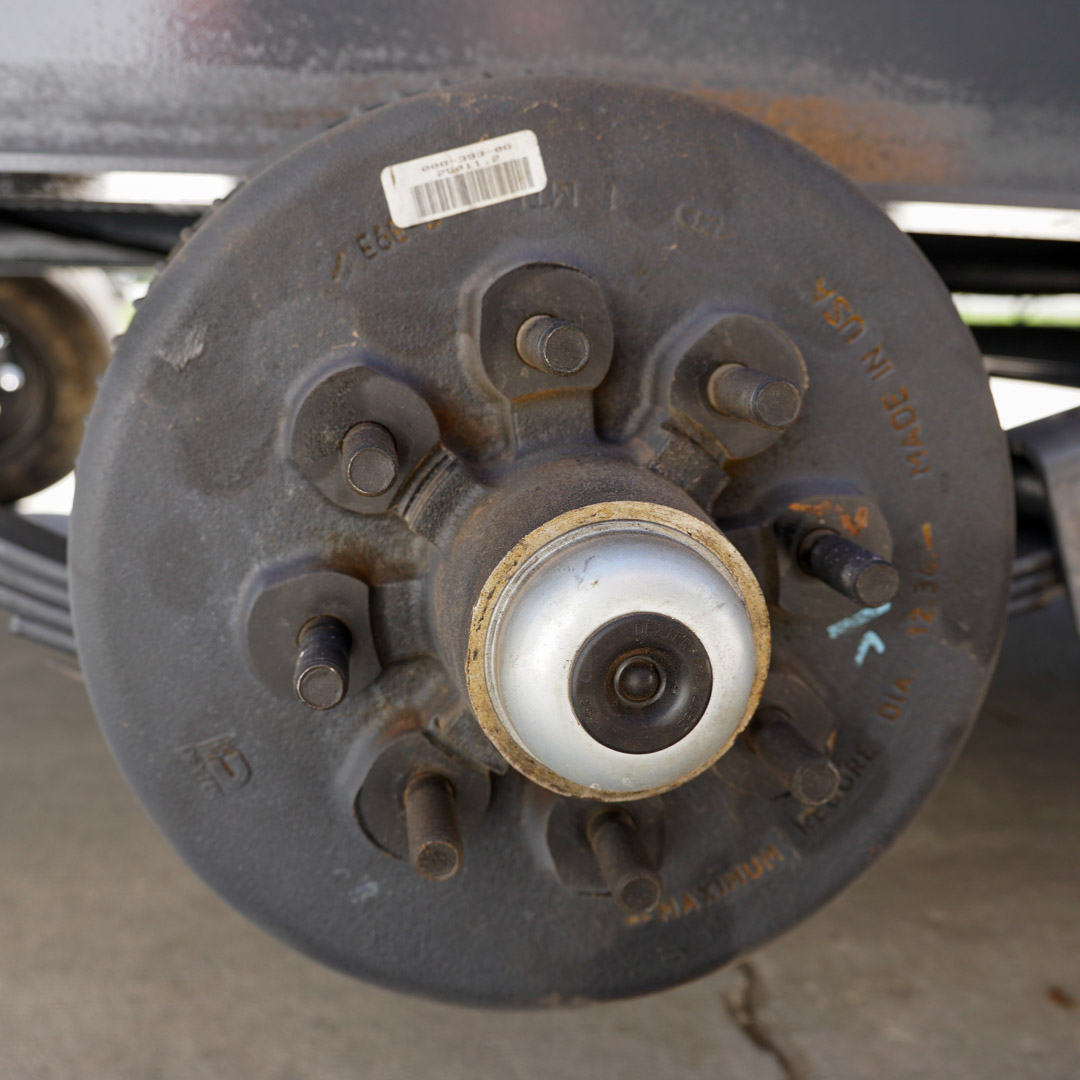
In the early days of trailers, braking systems were about as straightforward as they come. Many relied on mechanical linkages—rods, cables, and levers connected directly from the towing vehicle to the trailer brakes.
They worked, more or less, but they had their limitations. Adjustment was constant, stopping power was inconsistent, and if something came loose or broke, there wasn’t much backup. For lighter loads, that might have been manageable. For heavier hauling, it quickly became a problem.
The Rise of Hydraulic Brakes
As trailers became more capable, hydraulic brake systems started to take over, especially in lighter and mid-weight applications.
These systems use fluid pressure to apply the brakes, often via a surge brake setup. When the towing vehicle slows down, the trailer pushes forward slightly, activating the hydraulic system and applying the brakes.
Hydraulic systems improved stopping power and required less manual adjustment than mechanical brakes. They’re still common today on smaller trailers. But for heavy-duty flatbeds and commercial hauling, something stronger—and more reliable—was needed.
Air Brakes Enter the Picture
That’s where air brake systems come in.
Air brakes use compressed air to apply braking force, making them ideal for large trailers and heavy loads. They provide consistent stopping power and can better handle the demands of commercial transportation than earlier systems.
But early air brake systems had a serious flaw: what happens if air pressure is lost?
If the system lost pressure, the brakes could fail—exactly the opposite of what anyone wants when hauling thousands of pounds down the highway.
The Game-Changer: Spring Brakes
The solution to that problem came in the form of the spring brake, and it changed trailer safety in a big way.
Spring brakes feature a powerful internal spring that automatically applies the brakes when air pressure is lost. In normal operation, air pressure holds the spring back, allowing the wheels to move freely. But if the air system fails—or even if the vehicle is parked—the spring engages and locks the brakes.
In other words, spring brakes are a fail-safe by design.
They serve two key purposes:
- Emergency braking: If air pressure drops, the brakes engage automatically.
- Parking brakes: When the vehicle is parked, the system holds the trailer in place without relying on air pressure.
For heavy trailers and flatbeds, this added layer of safety is not just helpful—it’s essential.
Electric Brakes and Modern Systems
While air brakes dominate the heavy-duty side of the industry, electric brake systems have become common on smaller and mid-sized trailers.
Electric brakes use a controller in the towing vehicle to send a signal to the trailer, applying the brakes in proportion to how hard the driver is braking.
They’re simple, effective, and widely used on recreational and light-commercial trailers.
Modern setups often include brake controllers with adjustable sensitivity, giving drivers more control over how the trailer responds.
There are also electric-over-hydraulic systems, which combine the responsiveness of electric controls with the strength of hydraulic braking. These are often used when more stopping power is needed without stepping up to a full air brake system.
Why It All Matters
At the end of the day, trailer brakes come down to one thing: control.
Whether it’s a basic electric setup or a full air brake system with spring brakes, the goal is the same—keeping the trailer stable and stopping it safely under all conditions.
Spring brakes, in particular, stand out because they’re designed to work even when something goes wrong. And in the world of heavy hauling, that kind of backup isn’t a luxury—it’s a necessity.
 In Short
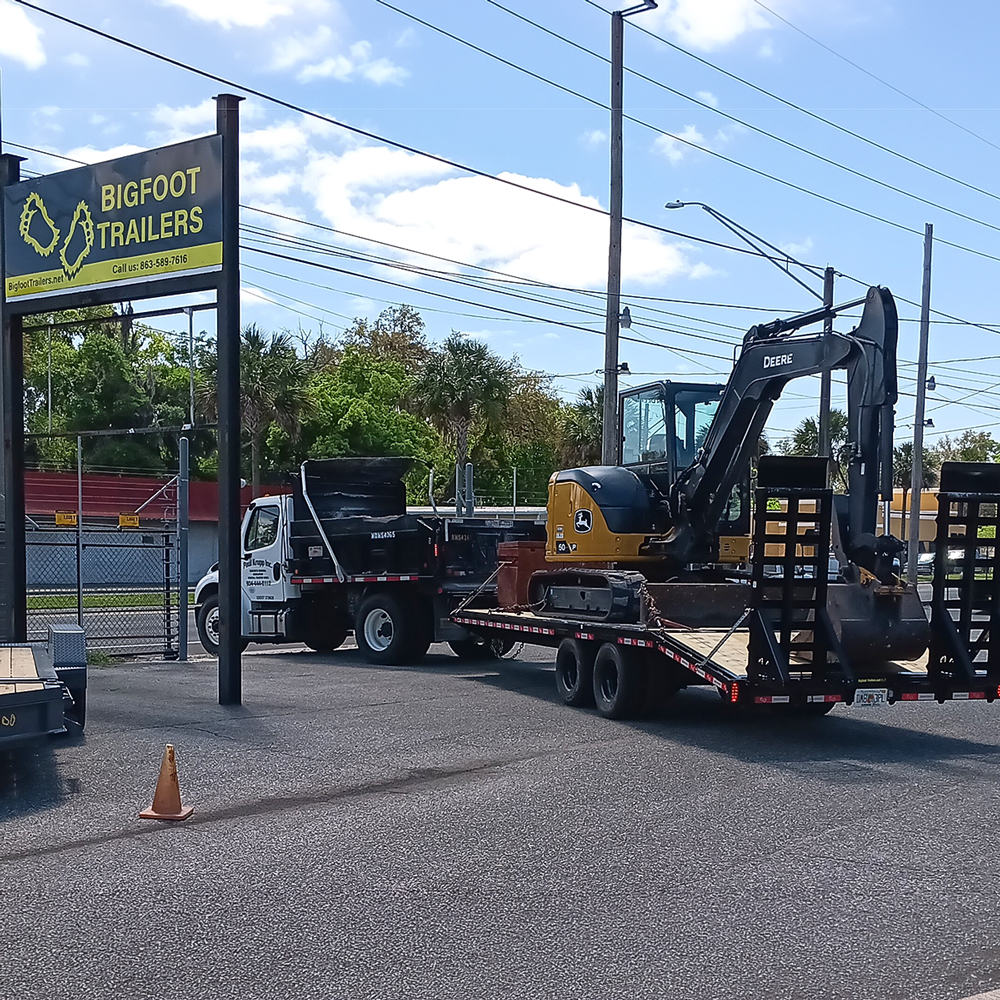
Trailer braking systems have come a long way from cables and levers. Today’s systems are more reliable, more powerful, and far safer than anything used in the early days of hauling.
From mechanical brakes to hydraulics, from electric systems to air brakes with built-in fail-safes, each step forward has made towing safer and more predictable.
And while most people don’t think much about what’s happening behind them when they hit the brakes, it’s worth remembering: a lot of smart engineering is working quietly to make sure everything stops exactly when it should.
Bigfoot Trailers is Versed in Braking Systems
If you have questions about which trailers offer the best brakes for hauling loads or the best durability, contact us today. We have high-quality trailers with high-performance braking systems. Let us help you choose the right trailer for your hauls. Don’t choose a lesser trailer dealer, trust Bigfoot!