Trailer Safety Drills: Practicing Emergency Stops and Load Checks for New Drivers
Driving a pickup truck with a heavy-duty trailer following closely behind can be intimidating for new drivers. While a lot of care and muscle are incorporated into Bigfoot premium trailers for safe hauling, it is ultimately up to the driver to practice safe driving, including emergency stops and load checks. These and other safety drills should be part of your company’s new driver training program.
The Essential Pre-Trip Load Check
Towing significantly alters a vehicle’s dynamics, requiring both discipline and practice to manage the added weight and length safely. So, before a new driver ever leaves the yard, they should master the pre-trip inspection. This drill focuses on the three critical parts of a safe towing experience: Hitch Connection, Load & Balance, and Control Systems.
Hitch Connection
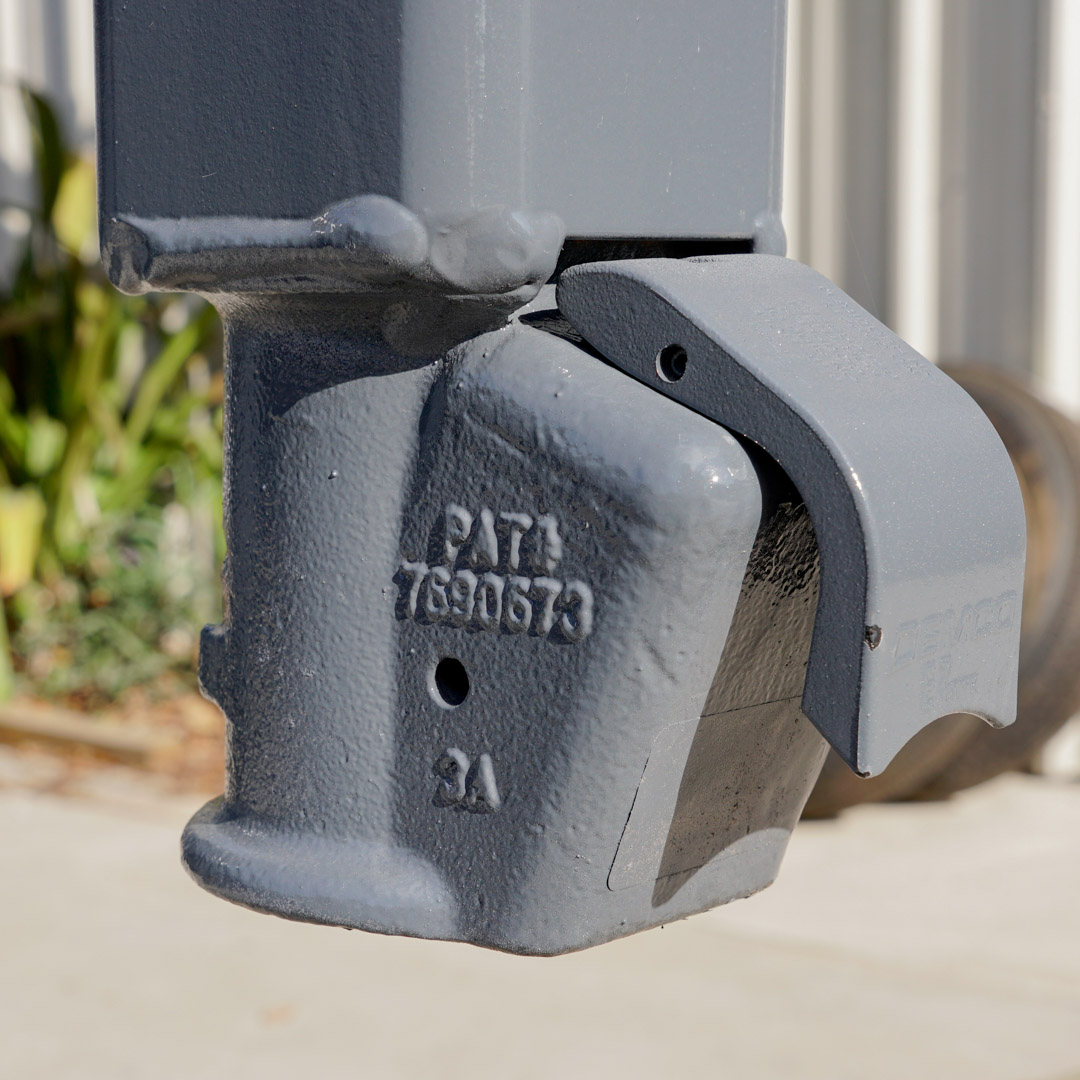
Verify that the correct ball size is used and the coupler is fully seated and locked. The safety pin or lock must be in place. This is the most critical step to ensure the trailer cannot detach. The safety chains must be crossed underneath the tongue, forming a cradle. It prevents the tongue from hitting the road if the hitch fails and helps keep the trailer centered while allowing enough slack for turning.
Load & Balance
A balanced load is the primary defense against dangerous trailer sway.
- Use a tongue scale to obtain an accurate tongue weight.
- Ensure that 10% to 15% of the total loaded trailer weight is applied downward on the hitch (tongue weight).
- Heavier items must be secured low and forward of the trailer axles.
Control Systems
Check the wiring harness, brakes, lights, and tires before every haul.
-
- Brakes and Lights: Confirm all brake lights, turn signals, and running lights function correctly. Test the trailer brakes separately using the manual control lever on the brake controller (if equipped) to ensure they engage smoothly.
- Tires: Check the inflation pressure on both the tow vehicle and the trailer tires, adjusting to the manufacturer’s recommended cold pressure for towing or the pressure stamped on the trailer’s sidewall.
Mastering the Emergency Stop
The single most significant difference between driving solo and towing is braking distance. A heavy trailer drastically increases the required stopping distance. New drivers must practice safely and calmly bringing the combined unit to a stop.
- Find a large, empty area away from pedestrians and vehicles. Set up cones to mark an imaginary “danger zone” where the driver must stop.
- Practice making gradual, progressive stops. Learn how the trailer brakes interact with the tow vehicle’s brakes. Avoid hard, sudden braking, which can cause jackknifing or excessive brake wear.
In an emergency, the driver must apply the tow vehicle’s brakes firmly. Simultaneously, if the trailer has a brake controller, the driver should use the manual trailer rake control to help slow the trailer and keep it straight without locking up the wheels.
Trailer Sway Recovery
Sway can be intense for new drivers, but a controlled response is the best way to prevent an accident. Never hit the tow vehicle’s brakes sharply. This action only makes it worse.
If the trailer starts to sway, immediately let off the gas pedal to allow both vehicles to slow down gradually. It is essential to keep the steering wheel straight. If necessary, use the manual trailer brake controller to apply the trailer brakes. This maneuver should pull the trailer straight behind the tow vehicle to stabilize it. Continue slowing until the sway ceases, then find a safe place to pull over and check the load distribution.
By incorporating these practical drills into your company’s training program, your new drivers will have the skills and confidence necessary to handle heavy loads safely on the road.
Heavy-Duty Flatbed Trailers for Sale Near Me
Whether you need a tiny home trailer, a car hauler, or even a custom trailer designed for your specific business, you’ll love Bigfoot’s complete line of bumper-pull and gooseneck trailers handcrafted in the USA. With our factory-direct service throughout the entire Eastern United States, as well as additional locations in Baltimore, MD; Hartford, CT; Boston, MA; Lakeland, FL; and by appointment with retailers in Fort Myers and Marianna, FL, there is a Bigfoot location near you. Contact us at https://www.bigfoottrailers.net/ for a free quote, and our team will guide you through the process, including our financing and rent-to-own options.